

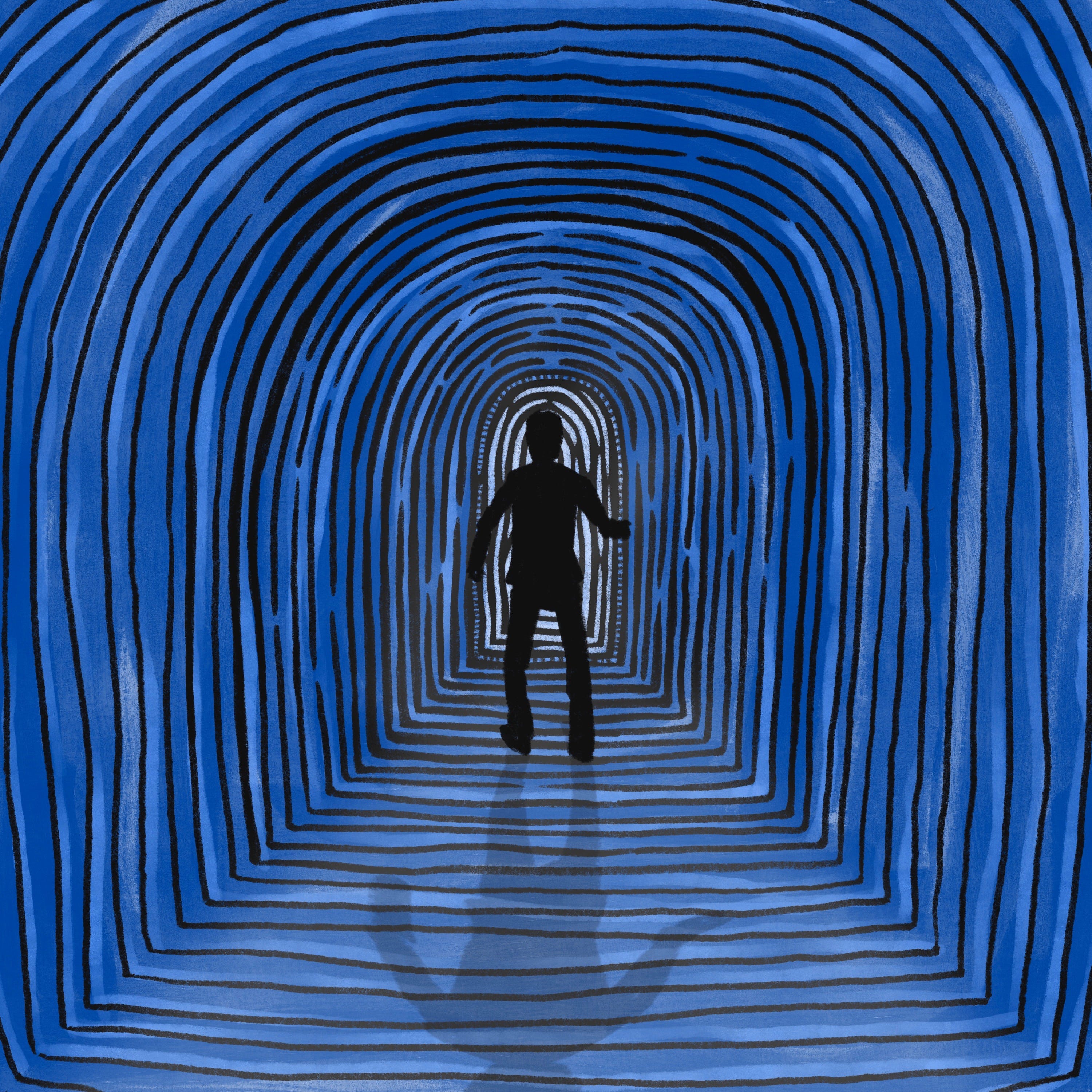
I’m a human of the loop, inside the system but maintaining critical perspective, and I’m bringing you into that loop with me.
I want to share my perspective from the inside of the loop, as a technologist who uses, builds, and deploys systems with these AI technologies, but also cares deeply about the impact they have on us, how we should be thinking about them and using them, and how critical we should be of those who control them.
I didn’t dream of being a software engineer or working in tech when I was growing up. These weren’t cool jobs in 1990, at least not to 9-year-old me. But when that first PC showed up on our dining room table in 1989, something in me changed forever. Computers, and later the internet, became a place where my imagination could rule. The internet probably saved my life some days. In college, I found something that rivaled the imaginative exercises that delighted me about Computers in studying Philosophy.
Later, I moved to Portland, OR where I worked on software in marketing agencies and peddled around on my fixed gear, stopping to drink beer and smoke cigarettes at the best local haunts. After burning out at agencies, I was convinced to join a startup by a friend. Again, I found a place where my own restlessness and imagination could really thrive, as the kinds of innovation required to succeed means you have to understand abstract ideas, execute concrete solutions, and be ready to turn on a dime.
Looking back now, I realize I’ve never stayed in one lane. I’ve taken roles at the crux of problems: fraud detection systems, healthcare tech, unified data architecture, developer infrastructure. Not to refine a single skillset, but because the interesting problems live at the boundaries between domains. Where security meets data meets AI. Where product meets infrastructure meets ethics. I’ve always been drawn to the messy, ambiguous problems that require synthesizing across disciplines. My restlessness, my need to create across domains, isn’t just curiosity. It’s how I make sense of the world. It’s how I create meaning. Building is my way of understanding, of existing, of being.
Building is my way of understanding, of existing, of being.
Now, I have a little over 20 years of working experience in tech, and over 30 years tinkering with it. I’m inside the loop, working as a CTO, building with these systems daily, understanding their technical reality. But I’m also trained to step outside that loop, to ask the harder questions that get lost when you’re optimizing for the next feature release or the next funding round. I can see both the technical possibilities and what they’re doing to how we think, work, understand ourselves, and relate to others.
The discourse around AI right now feels broken to me. Reporting on AI is either too general and fear-mongering, or it just repeats whatever OpenAI says uncritically. Big tech’s economic and political context leaves little room for considering how rapid AI innovation impacts us as people or our children. That’s not a judgment of intent. It’s an observation about how systems work.
Our perception of what’s real and possible is being crafted and manipulated. Plenty of philosophical grifters making millions right now selling absolution to billionaires under the guise of effective altruism.
AI is not the first technology to threaten human creativity, people feared the printing press, the camera, and the computer. But there’s something different about the scope and speed of what’s happening now, as well as the economic models of these large AI companies.
AI mimics not just the outputs of creative work, but the process itself.
Previous technologies innovated and automated specific domains, tasks, or processes. AI products are sold as operating across all of them simultaneously, and mimicking not just the outputs of creative and knowledge work, but the process itself. For someone whose entire relationship to existence is defined through acts of creation, AI feels qualitatively different. Not necessarily apocalyptic, but deeply unsettling in ways I’m still working to understand.
When I think about what AI can do to us, I’m not just thinking about jobs or economic disruption. I’m thinking about what it means when the act of making, the thing that gives many of us purpose and meaning, becomes optional or a luxury. When the creative struggle, the learning, the building of understanding through doing, is all abstracted away and we look to models as the source of knowledge or to find answers - we make our own understanding optional.
I’m here as much to understand and explore, as I am to share. I hope you will join me on this journey. I want to share insights and frameworks for thinking more clearly about AI. Not as predictions or prescriptions, though I may end up talking about those as well, but as tools for understanding what’s actually happening.
At a high level, I want to explore 3 main areas I think about often.
Ways of thinking about AI, to clarify and improve our relationship to it.
Not definitive answers, but mental models that help us see these systems more clearly: what they are versus what we’re told they are, and how we should think about our relationship to them.Where disruption and harm actually happen.
Not the sci-fi fears or the hype cycles, but the real mechanisms of change. We need to understand who gets hurt and how, where the actual risks are versus where we’re told to look. Both at larger, environmental scale, but also smaller scales, like in our homes.What this does to us as humans.
To our sense of self, our relationships, our perception of what’s real. How kids are growing up in this. How our understanding of reality itself is being shaped and manipulated. But not abstract philosophy, it’s about the daily experience of living with these systems, of watching them change how we work and think and relate to each other.
I’ll be joined by my wife, Megan Saxelby, who will be helping me as an editor. Her background in education, multiple graduate degrees, and her own success in writing are credentials enough, but she also brings a wealth of knowledge about research on dignity, emotions, and adolescents. These are critical conversations, and much of my thinking here originates from our discussions together.
I’m not claiming to have this all figured out. I’m writing this because I’m struggling to feel like I can do anything in the face of rapid change, and I believe clear thinking is the first step toward agency. I’m a human of the loop, inside the system but maintaining critical perspective, and I’m bringing you into that loop with me.
Thank you for joining me here, whether out of curiosity or with a critical eye.
Welcome!
Here for this!